Monday, September 7, 2015

Monkey


Words. We write them down and they come out of our mouths. We use nouns and adjectives and adverbs and verbs and link them all together to relay our thoughts. We speak these words in a familiar language in sentences hopefully the listener will understand.
Popular words appear and become overused in phrases or quotes or a dull response from the uninformed. “Awesome” is one of those words. Every thing from losing a job or getting married to wrecking your car to having a baby was “Awesome”.
Many words create anxiety or stress but few bring us laughter. Words like ‘rainbow’ and ‘unicorn’ and ‘kittens’ can bring temporary smiles but are hard to combine in a normal sentence.
I will recommend ‘monkey’. 
It is an easy word to say and can be fit into so many types of situations. There is ‘monkey business’ or ‘monkey around’. You can even substitute other words like ‘everybody’s got something to hide except for me and my monkey’.
It is a word that will guarantee to bring a smile and change the conversation or message in the most delightful way. Try it.
“Let go of my monkey” or “Excuse me, I forgot my monkey” could become part of your daily language. Using the word ‘monkey’ will increase your vocabulary and responses with a smile.
Warning: Don’t use the word to reticule or demean someone else because you never know when he or she will release his or her monkeys. 

Saturday, September 5, 2015

You Make Me Happy


And I don’t know why
Is it your face, your smile, your laugh, or just your presence that makes me happy?
You just make me feel go to be around you.
You bring out the best in me.
At the end of the day our experiences together make me smile.
And a smile is worth more money than any country can print.
Even in the common day-to-day routines of washing dishes or doing laundry or making the bed, having you nearby make all the difference.
You point out the silly things I forgot to see and put whipped cream on my nose.
If you hold my hand we can watch the stars pass in the night.
We can shelter from the storms and depend on each other to protect us.
On holidays we will present each other gifts of affections not so much of monetary values but of existence.
At the end of the day, you make me smile, and that makes me happy.
Thank you.

Tuesday, September 1, 2015

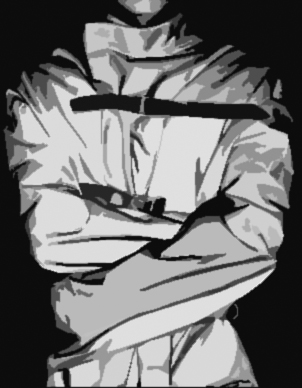
Crazy


With all the mass shootings and murders and violence and finger-pointing on is-it-the-gun or-the-shooter and the laws and amendments and tradition and heritage and the list goes on and on, the term “mental disturbed” person comes to play.
So my question is “What is sanity”?
Insanity, craziness or madness is a spectrum of behaviors characterized by certain abnormal mental or behavioral patterns. Insanity may manifest as violations of societal norms, including a person becoming a danger to themselves or others, though not all such acts are considered insanity; likewise, not all acts showing indifference toward societal norms are acts of insanity.
In modern usage, insanity is most commonly encountered as an informal unscientific term denoting mental instability, or in the narrow legal context of the insanity defense.
In the medical profession the term is now avoided in favor of diagnoses of specific mental disorders; the presence of delusions or hallucinations is broadly referred to as psychosis.
When discussing mental illness in general terms, “psychopathology” is considered a preferred descriptor.
In English, the word “sane” derives from the Latin adjective sanus meaning “healthy”. The phrase “mens sana in corpore sano” is often translated to mean a “healthy mind in a healthy body”. From this perspective, insanity can be considered as poor health of the mind, not necessarily of the brain as an organ (although that can affect mental health), but rather refers to defective function of mental processes such as reasoning. Another Latin phrase related to our current concept of sanity is “compos mentis” (lit. “sound of mind”), and a euphemistic term for insanity is “non compos mentis”. In law, “mens rea” means having had criminal intent, or a guilty mind, when the act (actus reus) was committed.
A more informal use of the term insanity is to denote something considered highly unique, passionate or extreme, including in a positive sense. The term may also be used as an attempt to discredit or criticize particular ideas, beliefs, principles, desires, personal feelings, attitudes, or their proponents, such as in politics and religion.
So ‘insanity’ is not playing well with others?
Folks, we just all don’t always get along. Lack of sleep, whining child, flat tire, traffic jam, boss chewing out, spilled coffee, bad hair day, etc. can make us all a bit grumpy. And all those grumpiness can build up to actual ‘not playing well with others’.
Do we then go ‘insane’?
A mental disorder, also called a mental illness, psychological disorder or psychiatric disorder, is mental or behavioral pattern that causes either suffering or a poor ability to function in ordinary life. Many disorders are described. Conditions that are excluded include social norms. Signs and symptoms depend on the specific disorder.
The causes of mental disorders are often unclear. Theories may incorporate findings from a range of fields. Mental disorders are usually defined by a combination of how a person feels, acts, thinks or perceives. This may be associated with particular regions or functions of the brain, often in a social context. A mental disorder is one aspect of mental health. The scientific study of mental disorders is called psychopathology.
Services are based in psychiatric hospitals or in the community, and assessments are carried out by psychiatrists, clinical psychologists and clinical social workers, using various methods but often relying on observation and questioning. Treatments are provided by various mental health professionals. Psychotherapy and psychiatric medication are two major treatment options. Other treatments include social interventions, peer support and self-help. In a minority of cases there might be involuntary detention or treatment. Prevention programs have been shown to reduce depression.
Common mental disorders include depression, which affects about 400 million, dementia which affects about 35 million, and schizophrenia, which affects about 21 million people globally. Stigma and discrimination can add to the suffering and disability associated with mental disorders, leading to various social movements attempting to increase understanding and challenge social exclusion.
Anxiety disorders: People with anxiety disorders respond to certain objects or situations with fear and dread, as well as with physical signs of anxiety or panic such as a rapid heartbeat and sweating. An anxiety disorder is diagnosed if the person's response is not appropriate for the situation, if the person cannot control the response, or if the anxiety interferes with normal functioning. Anxiety disorders include generalized anxiety disorder, panic disorder, social anxiety disorder, and specific phobias.
Mood disorders: These disorders, also called affective disorders, involve persistent feelings of sadness or periods of feeling overly happy, or fluctuations from extreme happiness to extreme sadness. The most common mood disorders are depression, bipolar disorder, and cyclothymic disorder.
Psychotic disorders: Psychotic disorders involve distorted awareness and thinking. Two of the most common symptoms of psychotic disorders are hallucinations -- the experience of images or sounds that are not real, such as hearing voices -- and delusions, which are false, fixed beliefs that the ill person accepts as true, despite evidence to the contrary. Schizophrenia is an example of a psychotic disorder.
Eating disorders: Eating disorders involve extreme emotions, attitudes, and behaviors involving weight and food. Anorexia nervosa, bulimia nervosa, and binge eating disorder are the most common eating disorders.
Impulse control and addiction disorders: People with impulse control disorders are unable to resist urges, or impulses, to perform acts that could be harmful to themselves or others. Pyromania (starting fires), kleptomania (stealing), and compulsive gambling are examples of impulse control disorders. Alcohol and drug are common objects of addictions. Often, people with these disorders become so involved with the objects of their addiction that they begin to ignore responsibilities and relationships.
Personality disorders: People with personality disorders have extreme and inflexible personality traits that are distressing to the person and/or cause problems in work, school, or social relationships. In addition, the person's patterns of thinking and behavior significantly differ from the expectations of society and are so rigid that they interfere with the person's normal functioning. Examples include antisocial personality disorder, obsessive-compulsive personality disorder, and paranoid personality disorder.
Obsessive-compulsive disorder (OCD): People with OCD are plagued by constant thoughts or fears that cause them to perform certain rituals or routines. The disturbing thoughts are called obsessions, and the rituals are called compulsions. An example is a person with an unreasonable fear of germs who constantly washes his or her hands.
Post-traumatic stress disorder (PTSD): PTSD is a condition that can develop following a traumatic and/or terrifying event, such as a sexual or physical assault, the unexpected death of a loved one, or a natural disaster. People with PTSD often have lasting and frightening thoughts and memories of the event, and tend to be emotionally numb.
Stress response syndromes (formerly called adjustment disorders): Stress response syndromes occur when a person develops emotional or behavioral symptoms in response to a stressful event or situation. The stressors may include natural disasters, such as an earthquake or tornado; events or crises, such as a car accident or the diagnosis of a major illness; or interpersonal problems, such as a divorce, death of a loved one, loss of a job, or a problem with substance abuse. A stress response syndrome usually begins within three months of the event or situation and end within six months after the stressor stops or is eliminated.
Dissociative disorders: People with these disorders suffer severe disturbances or changes in memory, consciousness, identity, and general awareness of themselves and their surroundings. These disorders usually are associated with overwhelming stress, which may be the result of traumatic events, accidents, or disasters that may be experienced or witnessed by the individual. Dissociative identity disorder, formerly called multiple personality disorder, or “split personality”, and depersonalization disorder are examples of dissociative disorders.
Factitious disorders: Factitious disorders are conditions in which a person knowingly and intentionally creates or complains of physical and/or emotional symptoms in order to place the individual in the role of a patient or a person in need of help.
Sexual and gender disorders: These include disorders that affect sexual desire, performance, and behavior. Sexual dysfunction, gender identity disorder, and the paraphilias are examples of sexual and gender disorders.
Somatic symptom disorders: A person with a somatic symptom disorder, formerly known as a psychosomatic disorder or somatoform disorder, experiences physical symptoms of an illness or of pain, even though a doctor can find no medical cause for the symptoms.
Tic disorders: People with tic disorders make sounds or display body movements that are repeated, quick, sudden, and/or uncontrollable. (Sounds that are made involuntarily are called vocal tics.) Tourette's syndrome is an example of a tic disorder.
Other diseases or conditions, including various sleep-related problems and many forms of dementia, including Alzheimer's disease, are sometimes classified as mental illnesses, because they involve the brain.
With that list, who isn’t insane?
It seems as if our entire species have more problems of cooping with everyday living so we turn to the medical profession to keep us calm with therapies and drugs, at least to the point of ‘playing nice with others’.
Our society or community or tribe is based on getting along with others. We all agree what the ‘normality’ will be and those who do not comply either move on or fester the strain of being different.
What makes a human tip over the edge and create such carnage?
That is for lawyers and doctors and mathematicians and politicians to discuss with their charts and graphs and tomorrow it will happen again and again. While the media will turn away to the next crisis, the general public will wring their hands and place flowers and stuffed animals and then get back to normality to stay sane. 
 
All I know is I should NOT have a gun because I am crazy.

Thursday, August 27, 2015

Suspended animation


Suspended animation is the slowing or stopping of life processes by exogenous or endogenous means without termination. Breathing, heartbeat, and other involuntary functions may still occur, but they can only be detected by artificial means.
Since the 1970s, induced hypothermia has been performed for some open-heart surgeries as an alternative to heart-lung machines. Hypothermia, however, provides only a limited amount of time in which to operate and there is a risk of tissue and brain damage for prolonged periods.

Sleep is a naturally recurring state of mind characterized by altered consciousness, relatively inhibited sensory activity, inhibition of nearly all voluntary muscles, and reduced interactions with surroundings. It is distinguished from wakefulness by a decreased ability to react to stimuli, but is more easily reversed than the state of hibernation or of being comatose. Mammalian sleep occurs in repeating periods, in which the body alternates between two highly distinct modes known as non-REM and REM sleep. REM stands for “rapid eye movement” but involves many other aspects including virtual paralysis of the body.
During sleep, most systems in an animal are in an anabolic state, building up the immune, nervous, skeletal, and muscular systems. However, sleep patterns vary widely among animals and among different individual humans.
Sleep seems to assist animals with improvements in the body and mind. A well-known feature of sleep in humans is the dream, which resembles waking life while in progress, but which usually, can later be distinguished as fantasy. Humans may suffer from a number of sleep disorders. These include dyssomnias (such as insomnia, hypersomnia, and sleep apnea), parasomnias (such as sleepwalking and REM behavior disorder), bruxism, and the circadian rhythm sleep disorders.

Dreams are successions of images, ideas, emotions, and sensations that occur usually involuntarily in the mind during certain stages of sleep. The content and purpose of dreams are not definitively understood, though they have been a topic of scientific speculation, as well as a subject of philosophical and religious interest, throughout recorded history. The scientific study of dreams is called oneirology.
Dreams mainly occur in the rapid-eye movement (REM) stage of sleep—when brain activity is high and resembles that of being awake. Continuous movements of the eyes reveal REM sleep. At times, dreams may occur during other stages of sleep. However, these dreams tend to be much less vivid or memorable.
The length of a dream can vary; they may last for a few seconds, or approximately 20–30 minutes. People are more likely to remember the dream if they are awakened during the REM phase. The average person has three to five dreams per night, and some may have up to seven; however, most dreams are immediately or quickly forgotten. Dreams tend to last longer as the night progresses. During a full eight-hour night sleep, most dreams occur in the typical two hours of REM.
Dreams have been seen as a connection to the unconscious mind. They range from normal and ordinary to overly surreal and bizarre. Dreams can have varying natures, such as being frightening, exciting, magical, melancholic, adventurous, or sexual. The events in dreams are generally outside the control of the dreamer, with the exception of lucid dreaming, where the dreamer is self-aware. Dreams can at times make a creative thought occur to the person or give a sense of inspiration.
Opinions about the meaning of dreams have varied and shifted through time and culture. The earliest recorded dreams were acquired from materials dating back approximately 5000 years, in Mesopotamia, where they were documented on clay tablets. In the Greek and Roman periods, the people believed that dreams were direct messages from one and/or multiple deities, from deceased persons, and that they predicted the future. Some cultures practiced dream incubation with the intention of cultivating dreams that are of prophecy.
Sigmund Freud, who developed the discipline of psychoanalysis, wrote extensively about dream theories and their interpretations in the early 1900s. He explained dreams as manifestations of our deepest desires and anxieties, often relating to repressed childhood memories or obsessions.

A nightmare is an unpleasant dream that can cause a strong emotional response from the mind, typically fear or horror but also despair, anxiety and great sadness. The dream may contain situations of danger, discomfort, and psychological or physical terror. Sufferers often awaken in a state of distress and may be unable to return to sleep for a prolonged period.
Nightmares can have physical causes such as sleeping in an uncomfortable or awkward position, having a fever, or psychological causes such as stress, anxiety, and as a side effect of various drugs. Eating before going to sleep, which triggers an increase in the body's metabolism and brain activity, is a potential stimulus for nightmares. Recurrent nightmares may require medical help, as they can interfere with sleeping patterns and cause insomnia.

It seems so simple. The sky gets dark so you put on your jammies and crawl under the covers and close your eyes only to be in some sort of suspended animation until the sun comes up. You wake up, stretch your arms, yawn in a big breath of air, and with your body and mind refreshed, and start a new day. It seems so simple.
Except when it is not that easy.
Sure you know people who can sit down in a chair and fall asleep. You can watch your pets for no reason at all, just lie down and fall asleep. Some can sleep from mental or physical exhaustion and some need aids to conk out. Some can sleep on the ground while others can’t sleep in the most accommodating mattress.
Some think they don’t need much sleep but when the body is tired, it will win. It is our recharge time.
Except for those nights (or days) when the body can’t find a comfortable spot and the mind won’t shut off. The thoughts range from what needs to be done the next day or is the backdoor locked. A Rolodex of ideas, thoughts, wishes and remembrances will flood the mind nonstop. They don’t have to be in sequence or any pattern and can jump from the present to the past.
On those nights, perhaps a stiff drink or two will persuade your mind to shut up. A different pattern of reading or watching television or looking at the stars, but upon return to the bed, it starts all over again. 
 
Sleep, you elusive mistress, will you visit me tonight?

Sunday, August 23, 2015

Sunday Morning


The sun comes up on yet another Sunday morning. Start the routine for Sunday but it is difficult to tell for everyday is Sunday or days just like it. The difference is there is no mail today.
There are more cars parked on the street for no one has to go to work on Sunday, unless you are a preacher. A few get up early to walk their dogs but there is no sound. A random car drives by ever so quietly on a Sunday morning.
The usual routine begins of reconnecting with the world and events of the night before sleep took you away. The usual putting on the same clothes worn yesterday, picking up keys, cards and phone, but today is special. Different pair of socks is pulled from the drawer. How exciting?
Catch up on silliness communications and drink a mixture of fake sugar, powered cream and instant coffee. The clock says it is time to wander. There is no date to time for the calendar is gone. The only day to remember is the first of the month to pay bills otherwise everyday is the same.
That is except for Sunday morning. Sunday morning everything is quiet. It is peaceful on Sunday morning. The ones who stayed late from Saturday night are now regretting that decision. Those who need spiritual fortification are listening to the writings and interpretations of what they do not understand.
The season is changing, just like everyday changes in the big wide open. The shadows slowly perform their ballet across the carpet of green and the leaves dance in the breezes. Stand and observe but there is too much to see it all.
One neighbor washes his car; another trims some bushes, while another jobs with his daughter on a bike with tassels on the handlebars. Each house on the path has a 30 plus year history of neighbors who have washed their cars and walked their dogs, and raised their children and had cook outs and family squabbles and then moved on.
Trying to remember what needed to be purchased today, a stranger approaches and relays a story of a forgotten deviled crab he had just run over. The little red-haired girl is there, but today’s quest is for blueberries and does not go well. Again there is no fresh fruit so it must be the frozen kind. Luckily they are satisfactory to the fuzzy diners’ palate.
Track forward and then return, taking deep breathes and clearing mind and body, challenging hills and coasting to observe the same sights that constantly change.
The season is changing for the shin on the leaves is dulling and soon they will fall. Acorns are already starting to pepper my way. The winds will pick up and chill and all the plans for summer that never were accomplished will be put back on the to-do list for next season.
For it is just another Sunday morning in Just Another Life.

Sunday, August 16, 2015

$


$ is the root of all evil or just a reason for commodity? Is it a purpose to a means or a devil in disguise? Is it a piece of paper or a sign of wealth?
We work for $. We work for $ to buy our daily bread. We work for $ to provide our family with shelter, health care, education, and the latest video adventures. We work for $ because we don’t know how to survive without it.
For we are consumers, well, I retract that statement for we have been programmed into consuming. Through the gift of modern advertising, we have been instructed on how we must have the latest blender or refrigerator or washer/dryer or microwave oven. We are also instructed on the proper fabric softener and healthy cereal and most powerful sanitary pad that can be purchased today.
So the dream is to work hard and long and make as much $ as you can to acquire all these desirable items. This was the post-war plan. Bigger is better. Trade in last years model for the latest features. Constant rollover of desires and the ever constant demand to spend our $ is what we live for.
Like lemmings, we all followed the plan and consumed houses and cars and green lawns and country clubs and the finest schools and all associated with being normal in a society seeking prestige, while forgetting those less fortunate. Someone will take care of them.
Let the government or one of those bleeding-heart organizations take care of the poor, like they do with the trash and snow removal. A bought and sold official will come up with some law or amendment to care for the less fortunate with rotting shelter, food lines and lacking health care. Don’t worry about education or creating job skills, just keep ‘them’ out of sight. Just throw $ at the problems for committees and researchers and reports to be made and speeches before the public calming the nerves but not solving any problems. Perhaps another study group needs to be formed? 
So as good citizens of the planet, we work hard and make our $ and pay our ‘fair’ taxes and take our kids to soccer and our trophy wives to the country club dances and drives our fancy cars and wears the appropriate attire with the latest hair cut. It is $ that provides us with all of these luxuries.
So what if there was no $?
How would you buy groceries? How could you pay your mortgage? How could you buy gas? How could you show your status in society?
What if your skills and training were all there was to provide for yourself and your family? The old term is ‘barter’.
Compensation for the effort should be and often is agreed upon before the work. Both sides accomplish their intended goals and everyone is rewarded equally.
But that would make everyone equal and how could you caste each other? Religion and color and even height are obvious ways, but $ is better. Why pay a young kid with great ideas and innovative thinking the same as a long time dedicated worker who in the long run hasn’t done anything except hold down a chair? Why should a woman make equal pay to a man when she is considered a second-class citizen? Why raise the minimum wage when the employee isn’t doing any extra work?
As the separation of the “haves” and the “have nots” widen, the job requires more hours without raises and the constant threat of layoffs. The dream of a better life is slipping away, no matter how much $ you think you have.
You really don’t have any $ anyway. Those greenbacks that used to fill your wallet are now a plastic card. The banks show on the computer screen a bunch of numbers, but still you hope it will be there tomorrow. That $1.00 could be dropped in worth to .50¢ in seconds due to global wrangling out of your control.
The game goes on everyday, at the coffee shop we order and hope we have enough $ to pay for it. The gas pump varies from day to day and we wonder if we have enough $ to pay for it. The politician decides to declare a campaign for office and doesn’t worry for there are others with $ who will buy it.
Buddy, can you spare a dime?

Wednesday, August 5, 2015

Little Red-Haired Girl


Do you ever have a fantasy? There is a little red-haired girl at the grocery store that is mine.
The Little Red-Haired Girl is an unseen character in the comic strip Peanuts by Charles M. Schulz. She is the object of Charlie Brown's affection, although he never dares to go near her. Whether or not she has any feelings towards Charlie Brown has never been revealed.
The only known Schulz drawing of The Little Red-Haired Girl was drawn sometime in 1950, long before she was referred to in the strip. Why Schulz did not introduce her into the strip when it started is unknown. She bears a strong resemblance to Patty, a character who was prominent in the early years of the strip.
Charlie Brown first pines for the Little Red-Haired Girl during lunch at school in the strip from November 19, 1961. He continued loving her until the end of the strip in 2000. In a series of strips from July 1969, the Little Red-Haired Girl moves away, causing Charlie Brown sheer grief. He sees her again during a ski trip a few months later, and Peppermint Patty and Marcie run into her at summer camp in 1972. On May 30, 1978 Charlie Brown says that he thinks about the Little Red-Haired Girl constantly, suggesting that she has moved back to the neighborhood. It is confirmed that she has returned in the strip from December 27, 1978, in which Charlie Brown stands outside her house. Even though she is often referred to in the comic strip, the Little Red-Haired Girl is never seen, except for one strip from 1998, in which she is seen in silhouette.

One reason Schulz never drew the Little Red-Haired girl in the strip, is to show Charlie Brown's hopeless longing for her. Schulz also admitted in 1997, “I could never draw her to satisfy the readers' impression of what she's probably like.”
The character was based on Donna Johnson, a red-haired woman who Charles M. Schulz proposed to but who turned him down. This is where Schulz got the idea for Charlie Brown's unrequited love years later.
My little red-haired girl drives a red car with a white stuffed toy in the read window. She parks in the same spot every day or at least the days she is working.
I started noticing her when I would park my bike. She was sitting in her car with the door open, smoking a cigarette and talking on the phone. Several times I saw her doing the same and wondered who she was?
I noticed her in the deli section but I never go there. I also noticed she never smiled. So if I saw her walking by, with that swagger she walks with, I’d ask her “Why don’t you smile?”
Then her car wasn’t in the lot. The next day her car wasn’t in the lot. The next day and the next her car wasn’t in the lot. Was she sick? Was she on vacation? Had she gotten another job?
It had become a familiar part of life to look for that little red car when I locked up but it was no longer there. The little red-haired girl would always be a fantasy to me. An unknown wonder that I was fascinated by. 
She appeared younger but I had no idea. She had an interesting attraction with enough rough edges to show life experiences. Maybe that was the reason she didn’t smile?
Who was on the phone? Her mother? Her boyfriend? Another job offer?
Like so many mysteries in life, I just forgot about the little red-haired girl and found something else to fill my time. A week went by and then another and life moved on.
So yesterday, I return to my same spot and lock up my bike when suddenly I see the little red car with the white stuffed toy in the rear window. The little red-haired girl is back.
Whether it is a creepy stalking or just a mild mannered couriousity, the mysterious little red-haired girl is still possible to walk by me and I can stop her to ask, “Why don’t you smile?”